
Info

The recent earthquakes in Southern California have highlighted the need for disaster planning for policymakers. National, state, and local stakeholders are increasingly concerned with the risks of climate change, aging infrastructure, and economic uncertainty. Mindful of these threats, resiliency analysis has become critical to the missions of federal, state, and regional agencies.
Resilience also highlights the connection between environmental policy and other policy priorities. A greater understanding of the economic consequences of environmental shifts requires that policymakers consider these impacts in diverse types of rulemaking. Rigorous environmental standards, environmental attainment goals, changing energy markets, and resilience to natural disasters are all now necessary lenses through which to view the long-term impact of any given policy.
REMI Economic Associate Cameron Luther and Economist Keith Waters, Ph.D. will be hosting a seminar entitled “Planning for Disaster: Resilience in Economic Forecasting” on Monday, August 5th from 9:00 a.m. to 12:30 p.m. in Olympia, Washington that describes how to evaluate and quantify economic resilience in the energy, environmental, transportation, and public finance sectors.
This seminar will also feature David Ding, Ph.D., Transportation Economist at the Washington State Department of Transportation, who will be presenting on how the state incorporates the REMI TranSight model into their transportation investment planning strategies.
Economic resilience is a vital component of resiliency analysis as it refers to an economy’s ability to withstand and appropriately respond to a disruption. A disaster tends to bring about physical damages, but citizens are typically unaware of the toll it takes on the local economy, as well as the organizations tasked with recovery efforts.
Metropolitan planning organizations and regional planning commissions prepare for disruptions caused by natural events such as hurricanes, wildfires, and earthquakes. Transportation departments evaluate risks posed to critical infrastructure, such as bridges and tunnels. Budget and revenue departments forecast the eventuality of a recession and budget shortfalls.
The elevation in the awareness and frequency of disasters provides more opportunities to prepare for devastation. Whether it is lobbying for grant funding, quantifying an organization’s resilience output, or calculating the impacts of a disaster to diverse stakeholders, economic modeling can enhance regional planning strategies as we advance toward the full incorporation of resilience.
This seminar includes presentations on the impact of resilience planning, descriptions of analyses completed using REMI’s economic modeling software, and the methodological approaches implemented.
If you would like to attend this event, please email Kendell Sweeney-Thomas at Kendell.Sweeney-Thomas@wp.remi.com, contact us by phone at (413) 549-1169, or click below to register.
REGISTER FOR THIS SEMINAR
AGENDA
Monday, August 5th, 2019
9:00 am - 9:30 am
Coffee/Pastries/Networking
9:30 am - 10:00 am
Resiliency & Demonstrating the Value of Infrastructure Investments
Cameron Luther, Economic Associate, REMI
10:00 am - 10:45 am
REMI E3+: Resiliency Analysis of Energy/Environment/Economy
Keith Waters, Ph.D., Economist, REMI
10:45 am - 11:00 am
Networking Break
11:00 am - 11:30 am
How WSDOT Uses REMI TranSight to Evaluate Transportation Investments
David Ding, Ph.D., Transportation Economist, Washington State Department of Transportation
11:30 am - 12:00 pm
Fiscal Resiliency Using Tax-PI
Cameron Luther, REMI
12:00 pm - 12:30 pm
Lunch
For your convenience, lunch is provided free of charge
12:30 pm
Adjourn
[button_remi class="width3 sections-class" link="javascript:void(0)" label="REGISTER FOR THIS SEMINAR" id="section-5"]
SPEAKERS
David Ding, Ph.D.
Washington State Department of Transportation
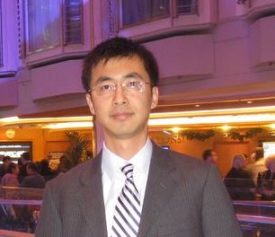
David Ding is a Transportation Economist at the Washington State Department of Transportation (WSDOT) in the Economics Analysis unit. Dr. Ding earned his Ph.D. in Transportation and Supply Chain Management at Beijing Jiaotong University in China, and his MBA from the University of Rhode Island. He is currently responsible for the transportation-related licenses, permits, and fees revenue forecast, as well as other economic studies. Dr. Ding routinely provides forecast results to WSDOT management, legislative staff, and stakeholders using econometric regression models and time series techniques. He is also engaged in the economic impact analysis for the Connecting Washington transportation projects using the REMI TranSight model.
Cameron Luther
REMI
Cameron Luther is an Economic Associate at REMI, responsible for client support and business development. Mr. Luther joined the REMI team as a recent graduate of The Ohio State University. While studying at Ohio State, Mr. Luther was heavily involved in Columbus’ Smart Cities program. He served as a liaison between Columbus and OSU, assisting the city with academic expertise. He was also a founder of Smart Campus, a student group dedicated to applying novel technology to campus problems. As a result, he is interested in using REMI’s many products, such as TranSight, to model to analyze the complex effects of smarter cities and other economic issues related to the regional economy. While at Ohio State, Mr. Luther also conducted research, investigating neuroeconomic explanations for recent findings in behavioral economics. Mr. Luther graduated from OSU with a Bachelor of Science in Economics and a concentration in Statistics.
Keith Waters, Ph.D.
REMI
Keith Waters , Ph.D. is an Economist at REMI. Dr. Waters has experience researching regional economic development, analyzing the geographic allocation of economic activity, and incorporating geography into an agent-based model to study firm formation’s linkages with inter-regional migration and the spatial distribution of labor within a country. Prior to joining REMI, Dr. Waters worked with organizations such as the W.E. Upjohn Institute for Employment Research, the Northwest Michigan Council of Governments, the U.S. Economics and Statistics Administration, and the U.S. Economic Development Administration compiling research and data for reports on geography, economic and community development, and economic impact studies. Since completing his education, Dr. Waters has been a teaching assistant and lecturer, speaking on subjects related to public policy, GIS and spatial analysis, regional economic development, and statistics. Dr. Waters earned his Ph.D. in Public Policy at George Mason University after receiving his master’s degree from the University of North Carolina at Charlotte in Geography and bachelor’s degrees in Economics, Geography, and Mathematics from Western Michigan University.


VENUE
Doubletree by Hilton Olympia
Doubletree by Hilton Olympia
Olympia Room
415 Capitol Way N
Olympia, WA 98501
Parking vouchers will be provided by our economists.